Author: Sargun Bedi

  • Acquire the Habit of Reading

    Acquire the Habit of Reading

    Learning and acquiring knowledge never really stop, even after we graduate from a university or land the job that we have always wanted. Learning as a process is something ongoing in our lives. In fact, unlearning something also requires us to learn how to unlearn. Strange but true.

    Here, I want to discuss something around a concept that sounds fascinating, but we find it hard to build on. Research shows that the lifestyle of the most successful people revolve around the enticing idea of making time to learn something or the other. When I reflect on the word ‘making;’ that rings a bell. They consistently find time to read, dive deeper into studying and understanding material well-above what is taught in the academic institutions. As no surprise, they become outstanding thinkers, creators and even leaders.

    Am I saying that reading and learning is the only factor involved in the success we envision. No. However, it certainly adds to one’s creative bent, envisages an individual’s cognitive bandwidth and also carves out a path for perspective building. And yes, all this with reading and “learning to read” in order to expand the very same spirit of success and growth.

    Well, reading might not allure a lot of people just in an instance. Thereby, I have jotted some ways in which you can fit reading and make it a part of your practice, routine, add it to your hobby list quite effortlessly. And remember to become effortless in something, we still need to put in an effort until it starts to run smooth within our functioning.


    • Set An Intention:

    Reading is so much about exploring and getting to know new things. It can be fun when we know what we want out of it. Select a genre, and find the book that fits your understanding. Although the idea of “intention setting” may seem woo-woo or like something one would do at the start of a yoga session, gym training session, business coaching session etc. It is pretty much fundamental for everyone with goals. Intention becomes the first and most important step in accomplishing objectives as one grows and commits to them.


    • Find Your Right Fit:

    Discovering quality books can be incredibly difficult. Due to the abundance of books accessible at first, you may end up getting a decision fatigue. Your energy may get drained before you even begin reading. To ease that very process, you can search for a curated list produced by industry experts you look up to and save time on selecting books. You may also ask individuals you respect about what they read, google “favourite books” of successful people you follow, or just pursue your own interests, which may also involve some experimenting.


    • Reading as a Morning Routine:

    Read in the morning, even if that means waking up a bit earlier that your usual time.  It is a good plan to devour at least 20 pages in the morning or time yourself for 30 minutes of reading each day. It is the ideal time to invest in yourself in the morning since your body and mind are both fresh enough from the goodnight’s sleep. A bedtime reading habit isn’t bad too but who knows how the day will end, how the fatigue will set in, what if the workload increases and what about some of those social responsibilities that might take up a toll.


    • Read as much as you can:

    Of course, if you have more time, do not limit your reading to just 30 minutes or 20 pages each day. Read as much as you can. Starting to read every day can help you improve your vocabulary, expand your horizon of knowledge, even add to your very own decision making and problem-solving skills. Not only that, this practice of reading can sharpen your analytical skills. As a bonus, some researches also state that a healthy practice of reading can aid an individual in becoming a better writer and even add to one’s expressions. It is like an ‘aha’ to learning new things, concepts and even shaping one’s behaviour.


    • Stay on Track

    After you have found the ideal book to start with and have these guidelines that I just shared above, you can build in a habit of reading and stay on track.

    • Track your reading habit daily. You can use an app for the same or simply write it down in your journal/diary.
    • Gradually, increase the no. of pages, chapters, or time as per your comfort and schedule.
    • Keep a book handy while you are on the move so you can fill in your “gap” hours; or you can call it ‘wasted’ time, if any. For instance, if you are travelling via public transport such as metro, cabs etc. In fact, the new trend of reel scrolling can be switched with picking up a book and reading a few lines.
    • Turn off the television when there is nothing of true interest to you and let the curiosity in the book set in the tone for you.

    In the realm of developing a practice of reading, these modest measures outlined above can help you achieve those changes you have always aspired for. Also, bringing in a realisation that majority of our behaviours that seem to have a significant influence on our lives, while not seemingly looked at as urgent are crucial. To simplify, big things that we aim for start with small steps and these very small steps are something that we either do not notice or surpass. Last but not the least, if you find yourself indulging in acquiring the habit of reading, and now that you are familiar with some of its benefits, take all the necessary actions and consistently works towards new learning, more growth, and your eventual success in life.


    Thanks for reading!

    To book in a session with a counselling Psychologist at Lucid Mind, kindly click here and fill in the contact form.

    This article is a contribution by our young psychologist Ms. Aayushi Patni who is emapenelled with Lucid Mind for over a year now. This is her first submission on our platform. We encourage such young talents to let their thoughts out.

    Edits: Team Lucid Mind 

  • Shun that Toxic Exchange with your Parents today ! Own your Responsibility

    Shun that Toxic Exchange with your Parents today ! Own your Responsibility

    Ever wondered if the clouds which were meant to protect you from the rays, get dense and hide the sun itself? Though the cloud’s main objective was to protect you, it has now wrapped a blanket of curtailment around; a world it wants you to perceive. Or the world could be a dense forest, with tall trees aiming to shield the small shrubs, but end up creating a dark space for them with no sunlight reaching out. If you twig closely, you can see the similarities between the above metaphors and your equation with your parents or the bond of people around you with their parents. It is a sensitive topic; many people aren’t probably ready for this conversation.

    I have heard many arguments stating that parent’s intentions are pure and undoubtful; maybe their way of executing them isn’t exemplary, but they wish the best for you. I wished this worked both ways. They are eligible to be treated as gods as soon as they give birth to a child. Or to be more accurate, this mindset develops in them after having a child. They live in this complex and at times, fail to carry out their duties. Parents feel just because they brought their children into this world, they should feel indebted towards them and give all the control in their hands. Their expectations begin from the very nascent stages and when the child is not able to fulfil them, they use fear as the weapon. Being respected and being feared sounds synonymous for many of them. Some think of this as a proud achievement, that someone fears them so much, that they would never do anything against their parent’s will. Some of them enjoy this power. They don’t realise they are shaping the personality of their child; instead tend to modify it according to their needs or the society and family’s expectations, probably to smother their insecurities and past trauma and feel more accepted by people around them.

    They sometimes fail to look at their child as an individual, they treat them as their clones and are thus expected to behave and act in the same way they do. When parents force their child to do something outside his/her comfort zone, it has a huge impact on the child’s mind. It creates doubts, no matter how much the child tries to act as the parent wanted him/her to and still not get acknowledged, it roots in. insecurities and low self-confidence. It is a daily struggle to be heard, to be loved and to get appreciated. It is heart-breaking when the parent doesn’t like their child expressing or feeling something in other ways than expected. It must be an agonizing feeling for the child, to not have any individuality. The child’s existence then, revolves around getting validated by his/her parents. But there is no limit visible as ‘ENOUGH’. Even when they try to share anything, the results are often hurtful, just adding an extra amount of pain to the pile which was on the verge of falling.

    These insecurities and trauma then can become the foundation for the other relationships in the child’s life.

    • Maybe a child was constantly made conscious about their body weight by their parents, find it difficult to love their body and allow anyone to touch it.
    • Maybe a child who was not loved and constantly sought validation from their parents now needs constant reassurance from their friends or partner and has a fear of abandonment.
    • Maybe a child who wasn’t appreciated or acknowledged for any achievement or accomplishment, now finds it difficult to believe people and accept compliments.
    • Maybe a child who wasn’t heard or allowed to express his/her feelings and just be himself/herself, now finds it extremely hard to communicate and ends up reaching out to toxic people because s/he thinks, this is how he or she should strive or function- on instability.

    It intensifies and ruins relations when their friend, partner or another connection is not able to understand. where is this coming from, what are the roots or sources for these traits and behavioural patterns. It is in fact hard for the child to identify why is s/he is reacting to a thing in a certain way, what was the trigger and what fuelled the reaction.

    The pandemic has made such situations even tougher. Earlier, there were escape routes. There were easy distractions. Now, no matter how much you run away, at the end of the day, you are back to this pain. You are present to see more arguments and conflicts between your parents without them realising the impact it has had on you from childhood. The more the disagreements, the more the misery and distress. These disputes can have all the reasons except you. It’s just a reaction, having a different origin being thrown out on you. You keep finding your fault and you fail. All you do now is wait for the world to resume.

    This is not an act of promoting hatred towards parents. You must have seen parents of people around and many of you would have wished the same love they give to their children. You believed you could have immense respect and gratitude towards your parents, only if they realised what they are doing to their child unknowingly. Many a times, you must have tried talking to them, explaining to them where they are wrong, and the results were as expected. You have done your part, there’s nothing else you could do. Just embrace yourself by not taking things on yourself, distance yourself from indulging in conversations that do you harm and balance your reactions vs. response variation. Allow yourself for having this responsibility on your shoulders to break this toxic chain here itself, and not carry it forward for new generations to come. You are brave and loved.

    Find yourself within 😊

    Thanks for reading!

    To book in a session with a counselling Psychologist at Lucid Mind, kindly click here and fill in the contact form.

    This article is a contribution by a young writer Riddhi Vadhel who is a student of BBA-MBA integrated course and has volunteered with us.  We believe she is exceptionally good at her style of writing and writes flawlessly with her own experience around mental and emotional health. We encourage such young talents to let their thoughts out.

    Edits: Team Lucid Mind 

  • I Am Anonymous

    I Am Anonymous

    Yes, I am just like the stars, always present in the sky but only reveal myself when the circumambience seems befitting, even if you think of this as a fancy term for longing darkness.

    I always wondered what harm could light do? It rejuvenates everything around, however, it also hides the flickers. It overshadows the small glimmers. It is the same light, which causes me to close my eyes, even when I once dreamt of being that strong. Isn’t it too much revered?

    I just wanted to be the petals swaying with the wind, but I was expected to be resilient like the tree in strong gales.  This pliancy then became my way of living. Gradually my credence in these expectations faded and it became my safe place. There were no fears then; what people can’t see; they can’t destroy. It was a miserable power- destructive yet life-saving.

    For the longest time, I tried to identify the source.

    People and their expectations are just a platform where your insecurities gain shape and merge with their thoughts about you. I never thought these scars would come from the people I loved. It seemed as if they were eternal, only to be proven wrong in the end. You give everything you can, and you do expect returns. Even on the days, when you get nothing back, the lack of acknowledgement feels excruciating. The flowers surely look admiring, but the pain of holding it while thorns prick your hand isn’t beautiful. It is like hammering nails in the wood despite it already being broken in pieces. It was a slow process, increasing the pain endurance limit day by day. There were moments when my brain would automatically shut down the voice inside me as if the whole responsibility of deciding what I deserved laid in its power.  The innumerable battles in my head would cause bloodshed from my heart. Giving small pieces of my heart to everyone I met, the pieces I could never get back. I thought they would be handling it with care, would keep it safely in some memory of theirs. I was wrong.

    Probably these memories weren’t even worthy of being nightmares that couldn’t be forgotten. Whereas, I still have kept these memories, placed delicately in some corner of my heart, which I seldomly visit, knowing it isn’t a place to dwell.

    While travelling this journey of mixed feelings and uncertainties, I met many people with different experiences. I couldn’t classify the strength of their pain and struggle as there exists no indicator for measuring ‘a more difficult experience.’ Every pain, every story and every experience was justified and deserved to be taken seriously. Here are just some of them:


    A – YOU DON’T BELIEVE IT UNTIL IT HAPPENS TO YOU.

    I had heard a lot about women being harassed at the workplace, school, college, public places and even at home. I thought this was something that happened with others and won’t happen with me. Clearly, I was wrong.

    I was 14 and was habitually sitting with him as he visited my home for the hundredth time. Suddenly I could feel his hand inside my t-shirt touching my Bra-strap. I was taken aback. I brushed aside, thinking that it must have happened unintentionally. The next day when I was dressing up, he came to my room and hugged me. I ignored him again. It felt terrible and filthy. I still neglected it because he was a family friend. Later that week, my sister came to me; I was shattered to hear that he touched her inappropriately. She was 10. This went on for months; he used to kiss, touch my breasts and other private parts in public, around my parents. Except no one noticed, I had had enough! Trying to keep my baby sister away from the beast was my priority, but I had had enough! I talked to my mother and cousin, they thought I was overreacting and he just loved us like his own children.

    But I knew I was right; I told my father then he was gone forever. But the fear he gave me years ago is still there. I would be lying if I said I’ve overcome those instances. But I’ve definitely moved past that. Lots of tears, sleepless nights, yoga and with the support of my loved ones, I’m past that.


    B- LIVING IN THE FEAR OF WHAT OTHERS THINK ABOUT YOU.

    Dear panic attacks/anxiety/breathlessness or whatsoever demon you are,

    I think you have been my constant companion for long time (definitely an unwelcomed companion), and you aren’t willing to leave me. This terror makes me numb, weak and miserable forcing me to sink into nothingness, thereby rewinding every small tragedy of my life, most significant being people judging me and my struggle for a perfect happy life. Previously, like everybody else, I cared too much about people’s perspective about me. But pretty soon I realised that it is worthless. Why do I always try to be perfect?  Why do we hide the ‘real us’? For the people who never really matter. Because the ones who matter would surely accept us with all our scars and flaws.

    I asked these questions to myself a number of  times and am trying to make amends necessary to myself. The joy of being ‘YOU’ is immense. The most free and beautiful feeling ever. I just want to be YOU-TI-FUL rather than being BEAUTIFUL because that’s all that ultimately matters.


    C- LIFE UNFOLDS BEAUTIFULLY, ALWAYS

    I hope you’re in a better place. This might confuse people but I’ll gently unfold myself and anonymously let people know a part of me. I’ve always been a happy-go-lucky person due to which people have always come to me with their insecurities, heartbreaks, problems, and every other possible thing. I’ve always been a shelter to their broken hearts. But I doubt if anybody every actually asked in return if I was doing okay. There was a time when all I did was cried myself to sleep. I had two childhood friends without whom I always thought I could do nothing. A few misunderstandings are more than enough to ruin relationships and friendships. So, life had its own plans. In a month, I lost the touch with people I considered family. However, during all this I stumbled upon a person who gave shelter to this ‘little fellow’ talking to you. I am no atheist, so, I consider that person as a god’s gift. Life changed thereafter, no more crying sessions at night and questioning myself. So, this is a sign for you to believe, no matter what, you will find the person. The person who will understand you, believe in you more than you believe in yourself, and accept all your insecurities. All I would say is never let people tell who you’re, and please patiently let people come in with all the love and warmth. They will surely change you for good and accept you the way you are. I have had a first-hand experience, and ever since my perspective towards life and love has completely changed. We grow and learn a lot of things with time. You’ll always be loved by your people; you just need to wait for them to discover you.

    Every person that I came across in life, made me realise that I am not alone. It made me believe that what I feel isn’t something just made up by my mind, it exists and doesn’t have to make sense to anyone else. It takes so much courage to talk about it partly owing to our previous experiences of venting it out in front of people who weren’t sensitive and partly because of our fear of being judged. There’s no pressure to speak up, you can choose your pace and time, but make sure not to keep it inside you, especially when it drains you out. Vent it out in any form, write, draw or talk to anyone- even the mirror, objects or people. The world could probably become a kinder place to live in.


    This article is a contribution by a young writer Riddhi Vadhel who is a student of BBA-MBA integrated course and has just started volunteering with us.  We believe she is exceptionally good at her style of writing and writes flawlessly with her own experience around mental and emotional health. We encourage such young talents to let their thoughts out.


    Edits: Team Lucid Mind


  • What Good is Victory, If You Can’t Feel It- Mental Health Perspective

    What Good is Victory, If You Can’t Feel It- Mental Health Perspective

    Life is fast-paced; everyone is running after something, but are you looking at what are you leaving behind? You may have looked at the sacrifices you made to achieve something. You may have believed that you need to go through all the rigorous steps and hardships; this is what success demands, right? There’s a limit to what a human body can endure and often this limit is seen as physical exhaustion.

    Did you ever notice your mental health as a compromise? You might have trivialised its significance and living in the semblance of normality. Even when your mind slightly felt precarious, there were people around to remind you, that you have to go through this painful, tiresome and most importantly mentally exhausting journey to be something, to show the world your capabilities. No, I am not against hard work, big goals, perseverance, I am talking about negligence towards yourself, your wellbeing.

    How often did you feel encouraged and supported by others when you reached your small milestones, climbed the initial steps of the ladder? They denigrated your spirit by saying, the sky is still far away.  I seldom wonder, why the same sky is the limit when everyone has different universes and black holes?

    If you discern closely, you relinquish your mental health on several occasions. The most common instance would be working under pressure of any sort and judgements. Isn’t it okay to take breaks? Does that derail you from your goal? You think you have to prove yourself; you think you’ll be judged if you do something apart from what is expected, you think of others’ opinions before believing in yourself. The doubts that you end up with might have the source within your mind, but it was the expectations that ignited it. I think it’s a human tendency to expect. You can’t control what others expect from you, but you can’t let that be your top priority. You just have to think of expectations as a tool to keep you on track, not the purpose behind everything. There is no escape from being judged. All your actions, decisions are going to be judged, even if you don’t give them the assent. So, if the end result is going to be the same, why not choose yourself first.

    You might think these words are very powerful and motivating to hear, but what about the consequences? Let me give you some real-life examples then.

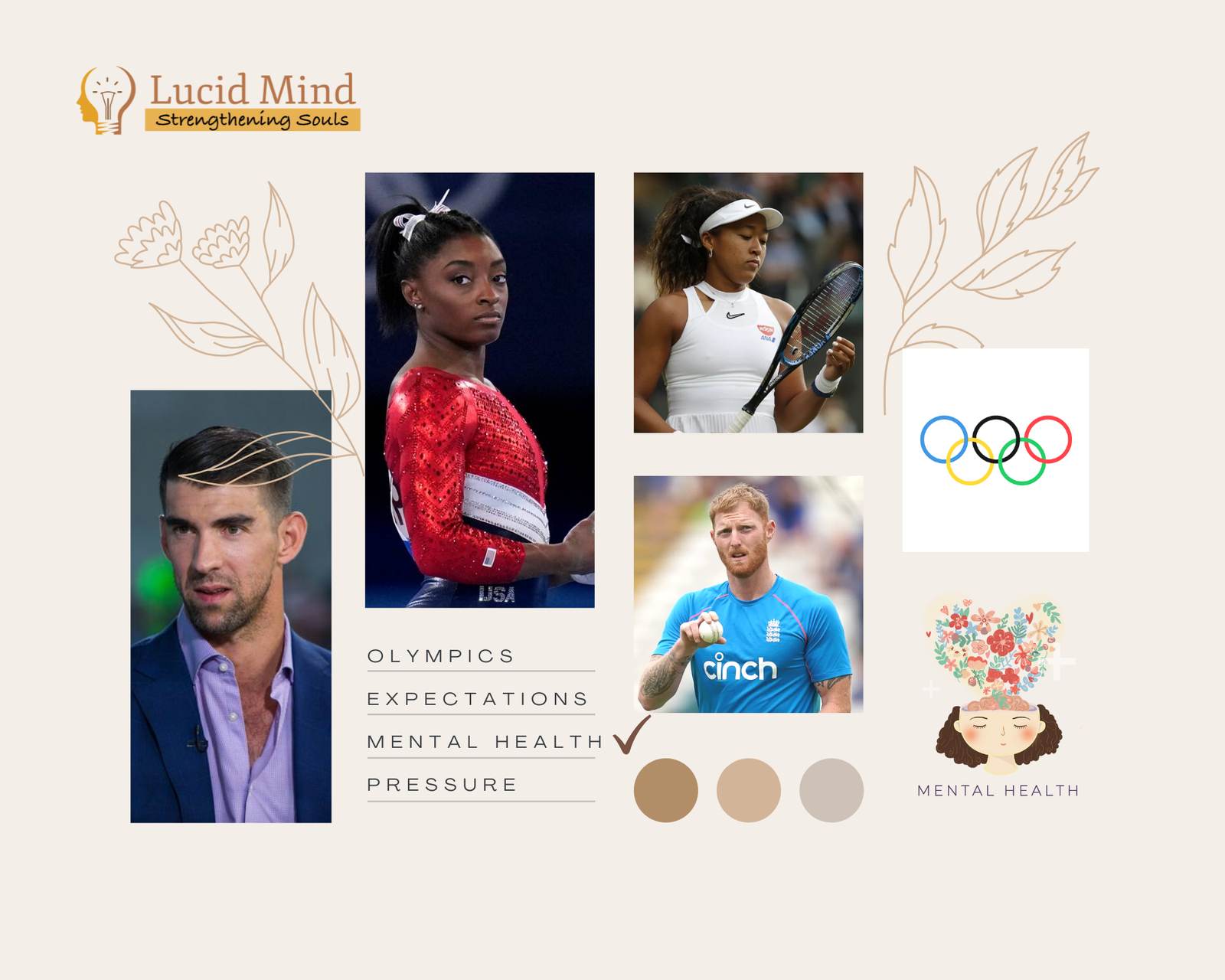
    Tokyo Olympics will always be remembered for bringing mental health into the limelight, with even the toughest players opening up about their struggles and the importance of looking after their mental wellbeing, more than just physical injuries. Simon Bile, an American artistic gymnast, with a total of 32 Olympic and World Championship medals, withdrew from this year’s Olympics citing mental health issues as the reason. She believes that we have to protect our mind and our body, rather than just go out there and do what the world wants us to do. “People have to realise that at the end of the day we’re humans, we’re not just entertainment. There are things going on behind the scenes that people have no idea about”, she said.

    Naomi Osaka, the world number one tennis player, earlier pulled out of the French Open in May this year and from the post-match press conference due to high stress, which earned her huge fine and ire, but solidarity from fellow athletes. She said, “It’s O.K. to not be O.K. and it’s O.K. to talk about it. There are people who can help, and there is usually light at the end of any tunnel.”

    Michael Phelps, an American former competitive swimmer, also called the most successful and most decorated Olympian of all time with a total of 28 medals wasn’t the part of 2021 Olympics swimming trials. He said, “If someone wants to call me weak for asking for help, that’s their problem because I am saving my own life.” He also felt positive about people talking about mental health over the last 18 months.

    Just after Simon Bile and Naomi Osaka, Ben Stokes, the England all-rounder announced an infinite break from cricket to prioritize his mental well-being, this decision was supported by the Managing Director and many players. He felt the limelight pressure, performing at such a high -level in the public eye has been tough. Even the pandemic had its part to play, staying away from home, in bubbles, restrictions and also the grief of losing his father, a former New Zealand rugby league international player, due to brain cancer were some extremely challenging situations.

    All these decisions taken by the athletes received huge support and applause. They received the highest award in people’s eyes, the medals of bravery. The pandemic has been hard for everyone, but there was one glister of positivity, people opening up and talking about the less discussed concerns of Mental Health. When people were forced to be at their houses, they saw their near one’s struggles more clearly, also realised many things and started paying attention to the smallest details. If not new concerns, the pandemic has intensified existing problems for people. Losing loved ones being at the top, the next most painful thing to watch and experience both, were the battles going on inside the mind. But this time, there is a space to open up, a ground to express.

    You might end up meeting people like you, with similar experiences. So, take a step towards reaching out for counselling and therapy. Before the pandemic and even now, there is a stigma associated with counselling & therapy for mental health. However, there is more awareness than before and you can freely reach out to any therapist across the world with just one tap.

    Prioritize yourself. You are precious, unique and not compelled to any norms and expectations of the society; just like every different flower in the tulip garden which is wholeheartedly appreciated for its beauty and grandeur.

    Thanks for reading!

    To book in a session with a counselling Psychologist at Lucid Mind, kindly click here and fill in the contact form.

    This article is a contribution by a young writer Riddhi Vadhel who is a student of BBA-MBA integrated course and has just started volunteering with us. This is her first submission on our platform. We believe she is exceptionally good at her style of writing and writes flawlessly with her own experience around mental and emotional health. We encourage such young talents to let their thoughts out.


    Edits: Team Lucid Mind 

  • Valuing Teenager’s Confidentiality in Therapy: Addressing Parental Worry

    Valuing Teenager’s Confidentiality in Therapy: Addressing Parental Worry

    IS THERAPY CONFIDENTIAL?

    Confidentiality is one of the warps and woofs of therapy. By being assured that you can say anything to your therapist and it will remain between you both, helps you feel safe and build trust with your therapist.

    BUT if you are the parent of a teenager in therapy, you may have several questions scaling up about confidentiality with your teen’s therapist and the idea of wanting to reach out to your teenager’s therapist at some point.

    Why maintaining confidentiality for the teen essential?

    Stated in Harvard Health blog, according to a study by Zucker et al (2019), researchers found that today’s youth do have concerns relating privacy and they may also lie about their risk behaviours or not seek health care services due to confidentiality concerns. As anyone who has been a teen knows, there are things you don’t always feel comfortable discussing in front of a parent or guardian for instance: sex or sexuality, substance use, mental health concerns or even physical concerns which they might be hesitant to talk about with parents considering it as silly to talk about or embarrassing or they might not want to worry their parents which means a teen could miss the opportunity to learn, explore questions or feelings about sexuality or healthy relationships and friendships.

    However, this is not what we want for our teens and adolescents.

    Besides the fact that what is most important is your child’s health and safety, the unavoidable fact is that teens grow into adults who need to learn to advocate their own health and well-being. And the best way to learn to do something is by practicing it.

    As a parent, it makes sense that you would feel like being involved in your child’s therapy, willing to understand his or her point of view. There is no denying that parents do play an active role in their child’s life and provide their teens the love and support they need, in order to grow into healthy and mature beings.

    For this reason,

    1. You have a desire to tell your teen’s therapist what you think they need to work on

    The fact is you would share it with the therapist, but just considering what you want your child to work on will be enough. Bluntly speaking, NO, it won’t be.

    A teenager must feel that their therapist is on their team.  If parents tip the wink of the therapist, telling them what to work on, the parents become the client instead of the teenager and the teenager certainly won’t feel like THEIR goals are what is driving therapy.

    While I understand it doesn’t seem fair that as financial, emotional and social supporters (parents /guardians) of the client, not getting direct access to these services could feel frustrating. However, parent’s access to their teen’ therapist, specially without the presence of the adolescent/teen may actually ruin the therapist-teen relationship, which is the most essential element of the therapy.

    To avoid such a situation, absolute transparency helps. At any point, if the parent needs to communicate anything with their teen’s therapist, their teens should be informed about it; or it should take place in the presence of the teenager.

    This keeps their trust and they don’t have to wonder whose agenda is on board.


    2.You wish to seek reassurance from the therapist about your teen.

    Reassurance, could be a nice band-aid that works in short run by giving you something to soothe your worrying thoughts. But, not in the long term. Because as soon as it wears off, those worrying thoughts will come back and you’ll need more and more reassurance.

    Also, another constructive way to look at this could be to think about how anxious you are about not being a part of your child’s therapy. Similarly, think about how anxious your teenager will feel if they are not a part of their OWN therapy.

    Yet, if you still feel like engaging with your teen’s therapist, it needs to be done very carefully by having your teenager present during all conversations. It is a perfect opportunity for them to practice all they are learning in therapy to cope skilfully in an uncomfortable scenario.

    Including your child in almost every situation in that conversation is best because it:

    • Protects the therapeutic relationship between your teenager and their therapist, so therapy actually works.
    • Prevents replicating an unhealthy family dynamic in therapy.
    • Reduces the risk of your teen blaming you for violating their privacy.
    • Teaches your teenager how to be their own advocate.
    • Prevents the therapist from burning out so they can continue to be effective in their therapeutic realm.


    1. You want to share your observation about your child and the things that could work for/on them

    Bringing your prospective in the therapy session through your teen’s therapist might barge your teen to introspect into their own world, leaving them confused and distant many times.

    Instead ensuring your child is included in any conversation with the therapist and having your teenager present in the conversation allows them with the opportunity to agree/disagree/modify/advocate, and give their prospective in that moment.

    This protects the essential therapeutic relationship between the client and the therapist.


    1. You want advice from your teen’s therapist on what to do for a particular situation

    A therapist will not provide advice, but recommendations if at all the need be.

    If your child has crossed limits, broken house rules, the recommendation will likely be towards using behaviour changing strategies/behavioural modification tools and techniques. For example, this may mean implementing consequences. If your teenager starts anticipating this as coming from their therapist, s/he may want to start avoiding their therapy sessions.

    This can complicate the situation further because one’s role as a therapist here is to help the teen learn to accept consequences, gracefully.

    Specifically, here, consulting a parenting coach could benefit, which your therapist may recommend if needed.


    1. Scheduling your teen’s session with their therapist for them

    Scheduling their own sessions themselves gives your teen an opportunity to take ownership towards their behaviours and actions. The older your teenager gets, the more responsibility they can take for managing their schedule. It aids in in growth & self-dependence.


    1. Your fear about your teen being in early relationship/s

    As Parents of a teen in ‘therapy’, we may fear about our teen being upset because of their early as well as intimate relationships. As a mother of an adolescent, I myself resonate with this fear.

    It can leave us as parents in a dilemma, because if we allow our adolescent or teenager to be in a relationship, there would be consequences. For instance, distraction from studies and risks of STDs (sexually transmitted diseases). Though, if prohibited, parents fear that their teen might indulge in such aspects secretively, which can make the situation worse.

    Carrying this big-time dilemma parents might have an urge to reach out to their teen’s counsellor/therapist to ask what is actually going on or which path they should be choosing. But your teen’s therapist is neither a Parenting coach nor your Family therapist.


    Parenting teens can be hard, and it could be immensely difficult for the parents to know how to involve themselves in their teen’s therapy in an appropriate manner.

    Though through the above discourse, we understand the utmost importance of the confidentiality of a teen in the therapy, but it may also not be appropriate for the parents to distant themselves absolutely from the whole experience of their teen’s therapy in the name of confidentiality.

    Parents too play an important role in their teenager’s therapeutic world as they as they are the primary caregivers and family to the teen and as a minor, parents have the full authority to understand their teen’s difficulties.

    I understand that as a parent, you wish to see your child as happy, sorted and involved with you. However, observing your own self, noticing your own behaviours can be an effective first step towards bringing warmth, positive changes and willingness from your teen towards a healthier life.

    Showing and demonstrating trust that you are there for your teen, by listening to them, by providing unconditional love and support, by being willing to acknowledge your teen therapist’s recommendations, by visiting your teen’s therapy sessions as and when required/called could be helpful towards shaping a successful therapeutic process.

    I understand, it can feel overwhelming and also ignite curiosity to know what is going on with your teenager. Also, not clipping the idea of your teenage/other teenagers with your adolescent can seem difficult to comprehend. If you feel you still have questions on why confidentiality for your teenager in therapy essential, please feel free to book a slot and clarify all your doubts at any point.

    Editing Team: Lucid Mind


  • Emotional Resilience in the Wake of Pandemic

    Emotional Resilience in the Wake of Pandemic

    Emotional Resilience in the Wake of Pandemic

    On November 17, 2019, a 55-year-old individual from Hubei province of China, as anticipated was diagnosed with the novel coronavirus Covid-19 also called SARS-CoV-2 (source: firstpost). How s/he got infected is a controversial topic but, since then day life has not been the same as it was before that. Around 148 Million people have got infected with the virus worldwide and 3.1 Million innocent lives have been lost as on April, 28th’21 (Source: Pharmaceutical Technology). This pandemic has been the cause of stress for many people around the world. Some have lost their loved ones, some have lost their jobs, and some are suffering mentally due to endless restrictions and lockdowns.

    On the other hand, scientists have done a tremendous job developing the vaccines for COVID-19.  The vaccine for this virus is the fastest ever to be developed. Scientists went from identifying a new pathogen, the coronavirus, and discovering an immune response against it and successfully developing and testing a safe and effective vaccine for it in less than 12 months. It’s a remarkable achievement of medical science to develop a vaccine for a deadly virus in such a short time.

    But the real issue of vaccination lies in the logistics and distribution part. How fast do you think we can vaccinate the whole population on the planet? That’s the mind-boggling question. We’re already observing a stark difference in the vaccination numbers around the world. Some countries have already vaccinated up to 60% of their population but some have not even administrated a single dose. That’s due to the reason that many wealthy countries struck a deal with the companies developing vaccines for deliveries of first batches in exchange for funding their research of vaccine development. While rich countries are hoarding much of the world’s vaccines, many poor countries have currently secured little to no doses for their entire population. This is better explained in a New York Times article, How Rich Countries Got to the Front of the Vaccine Line’ (Collins & Holder, 2021).

    Even after all the progress in vaccine development, the recent news that cases are climbing worldwide and deaths are also increasing every day is scary. During the initial days, it was at its peak in China. Then it wracked havoc in the USA, Brazil, Italy, and the epicenter these days is in India, where 300,000+ new cases and up to 3000 deaths have being reported every day dated 21st April’21(Source: The Hindu). If you look at the number today i.e 8th May’21, NDTV has reported 4.187 Covid Deaths in India & 4.01 lakh new cases.

    There have also been reports of oxygen and bed shortages in India due to which the death rate is climbing every day and according to some sources, the death toll is even higher than being reported. The reason behind the sharp increase in cases is the lack of preventive measures among the masses and relaxed restrictions in recent months.

    The health system in many countries is under massive pressure due to the rising influx of covid-19 patients worldwide and it clearly shows we were not prepared for a pandemic on this scale. We need to show resilience to overcome these hard times and resilience is something that’s built over time according to the things we experience, the setbacks we suffer, and our ability to stay calm during tough times.

    With there being no sign that the pandemic is going to end anytime soon, we need to prepare ourselves for the worst, just in case. Looking at the way things are going at the rate now; you might not be wrong to think we are not going to survive this pandemic. But hey, a little positivity and imbibing optimism doesn’t hurt. After all, humanity has been through many similar, and probably worst of pandemics and wars. We have all survived through the hard times in the past and we will probably survive this pandemic too. Given that we follow adequate safety measures and stay positive.

    Although some people are born more resilient and emotionally brave, others are not, but the beauty of emotional resilience is that people can work towards enhancing this aspect. Therefore, building on the factors that promote emotional resilience can be highly useful. That is to understand what is really in our control and what is not & how we can adapt to the changing circumstances. When we are internally motivated to face the storm and rise above it, regardless of the consequences. So, it doesn’t really mean fighting and winning a situation, it just means winning over the situations by not giving into the pressure it creates.

    According to Dr Barry’s famous book, ‘Emotional Resilience: How to Safeguard Your Mental Health’, personal skills, social skills and life skills are the three subsets to building emotional resilience. Our personal skills include our ability to bring in self-acceptance, being empathetic, being able to manage our emotional burnout. Whereas, social skills are those that talk about the interaction of ourselves with the environment and vice versa. Thus, looking at successful interpersonal interaction. Life skills, on the other hand are a concoction of all the skills; personal, social, cognitive abilities that work together in helping us manage stress, resolving conflicts, helping us integrate work and life otherwise.

    Here are a few tips to build emotional resilience during the COVID-19 pandemic, especially;

    1- Beat the Stress

    The first and foremost thing we need to do is keep ourselves stress-free. Stress is what eats us from the inside. If you’re under stress, you won’t be able to sleep properly, take correct decisions etc. Panic, stress, and worrying are our natural responses to threats and situations like these but stressing ourselves is not going to help and we need to stay calm. Involving activities that can keep stress at bay can help us adapt to different sources of stress and also help us manage this collective trauma. Consciously being selective of the news, keeping in touch via video and phone calls with friends and family, being able to keep the grudges away and staying involved with your people, going back to things that have been long pending for you could help you cope up with the lost hours, planning on some breathing exercises to be able to centre your feelings and thoughts. If we can learn to manage and keep situations separate from our experience, we can make our life much easier during times like these. Also, maintaining our regularity and routine amidst the troubled circumstances can help us manage emotions well.

    Find a downloadable resource to a simple breathing exercise that you can incorporate in your daily life, Click here

    2-Take Safety Measures

    One of the most important things we need to do to keep ourselves safe is taking ‘safety measures’ as advised by the relevant health authorities or the government. The most commonly followed measures are wearing a ‘double’ mask, even while you plan on having your evening tea in the balcony or front-yard. It is a must. Who would’ve thought that things like a mask would become a part of the daily life of a common man? Sad but that’s the reality. We also need to avoid close contact with people, touching random surfaces outside, and ensuring that we are sanitizing and washing our hands frequently to stay safe. This calls for physically distancing ourselves from our parents, grandparents; knowing that it is safe for them and us both. Working on this guilt will allow you to think practically about taking precautions.

    Here is a printable to download, which you can paste around for your kids to follow as a reminder, click here

    Please note: wearing a double mask is a mandate.

    3-Look After Yourself

    A very common saying, self-care is not selfish reminds us that it is for everyone. Self-care has always proven to be the best way to survive crucial times and this pandemic is no exception. Adding some sources of self-care and not just for indulgence but really profound self-care such as creating a routine, sleeping on time, not giving in that one extra episode on Netflix, exercising; something that really keeps your hormones in check can be extremely fruitful in balancing your emotions. Eating properly, getting enough sleep, exercising daily seem like every day routine but the role they play in maintaining a healthy lifestyle is often underestimated. Many people have lost track of their life just because they stopped caring for themselves. Make sure you’re not one of them!

    I have added 2 resources for you to download free trackers, Link 1 + Link 2

    4-Work on Developing/Learning New Skills

    As they say, it’s never too late to learn something new. You can use this time to enhance your skill-set by learning something new that might keep you busy and free of any negative thoughts and might even earn you some bucks in the long term. Like taking an online course, learning zumba or writing an e-book, like whatever works out for you. Even, building on a simple habit of reading.

    Instead of just sitting around, ensure to utilize this time to learn something. Here are few links that could help you structure your idea of learning: www.coursera.com, www.udemy.com, www.cure.fit, www.upwork.com, www.unacademy.com

    5- Be Grateful

    It’s a rewarding practice to be thankful even during the hardest of times. Just think of how many people are dying every day due to COVID or even when there was no covid, people were dying due to poverty, terrorism, hunger etc. Gratitude helps us focus on the things we have and keep us away from grouching about things that we don’t. You should be thankful that you are alive and healthy when the whole world is in an uncertain state. This call for your effort to spread positivity around by being grateful.

    Gratitude is the purest form of wisdom-oriented practice. It makes you wise, kind and remorse free. Here, I have added a downloadable resource of a basic gratitude pdf, which you can fill in at any point every day. It surely will make you feel good and at peace. Click here

    6-Become Self-Aware

    This aspect is the most essential part in building your emotional resilience. Self-awareness is about knowing who we are and why we are who we are. To simplify it, if you can identify the cause behind your action or behavior and identify the resulting consequence, you can work better on your intra and interpersonal connections. Situations are inevitable, but the meaning we give to those situations in our thoughts lead us towards an emotion and finally an action. So, imagine, how much can becoming self-aware do it us. It can help us control, manage and convert our reactions to healthy responses. Therefore, saving us a deal of getting stuck in a negative loop, look at our relationships more constructively, save us from misunderstanding and misjudgment of our situations around, have a healthy inner dialogue. Here you can find a simple practice sheet, to work on becoming self-aware, Click here

    7- Watch Out for Your Mental Health

    Even after doing everything mentioned above or suggested by local authorities, if you think this is too much for you to handle, seek professional help as soon as possible. You might be missing going out with your friends, meeting your family/relatives, worried due to your current financial position, unable to deal with the long-distance relationship or having difficulty concentrating on your work. But you must understand that it’s normal and mental health is for all. Therefore, seeking professional help in the form of counselling or therapy can really help you understand yourself and help you build your coping mechanisms, regardless of age, gender, occupation.

    To book in a session, log on to staging.lucidmindcounselling.in ; avail 50% off on your first consult – Grab the coupon today (limited Period offer)

    You can take these small steps to help yourself build the edge of emotional resilience, to survive this crisis or any future hardships.

    In any case, we should still be prepared if things go south. After all, we are all humans, filled with emotions and all we can do is try and hope for the best. We should also try to help others who are struggling by supporting them in any way we can or by helping them reach out or by guiding them in seeking professional help such as counselling if the overwhelm is becoming unbearable for them. It’s a time when we all need to support each other, while also following the safety protocols. Not giving in the collective fear, rather building collective emotional resilience for the greater good is the need of the hour.

    Thanks for reading. Stay safe!

    For booking in a counselling slot, log onto staging.lucidmindcounselling.in

    Happy to Help 😊

  • Counselling: A Boon

    Counselling: A Boon

    Have you ever said ‘Don’t worry everything will be fine’ to someone you care about?

    Do you say that often to the people who you feel bad for when they go through pain, confusion, accusation? Then you are not helping them. This won’t make them fine. This won’t make them feel any better. They need someone to share their concern with.

    Did you just tell yourself that you do listen to their story? Then you are not helping them. This won’t make them fine. This won’t make them feel any better. They need someone to understand what they are going through?

    Did you just tell yourself; you try to understand?

    Look, it’s defined that when someone is going through an emotional turmoil they are not in state or even expectation to believe that someone would even get them the way they feel. Its easy to hear someone cry out, it’s easy to tell them to have faith, its easy to say let go.

    For whom? Its easy for us.

    We are pacifying them but we can’t feel their feelings. Is that what came into your head right now.

    Absolutely! We sometimes feel that being someone’s best friend, closest pal or family, there is no one better than us who could understand the concern of that person who is feeling turmoiled. However, it’s not true. We may act as their comfort zone however, this comfort zone becomes suffocating after a period, not only for them but for us too.

    People loosely use the term ‘counselling’. To speak as ‘I myself have been counselling him/her’ or; who can be a better counsellor than me for s/he is my buddy.’ Well, it’s a respected fact that in our difficult times, we need our closest people to support, comfort and guide us. However, it’s just not counselling. Counselling as a process is a professional delivery of facilitation and empowerment without being suggestive, without being knit to the idea that time will heal everything. It doesn’t mean that it’s mechanic in nature. It absolutely holds value for the person in distress as well as the facilitator. This is a space for the distressed to be vulnerable without judgement, opinion and labels. Sensitively, language is chosen to mirror it back to the client (person in distress) where subconscious gains happen. These gains indicate that all the self-sabotage and enthroned belief systems that the client holds is being melted in a way that cannot be touched or seen but just felt in time. For this, there are professional skills of counselling required for the counselling psychologist to dig & wipe the unneeded baggage of the client. With scientific basis in hand, counselling a subtle art not known to someone who hasn’t mastered the right skill level, no matter how many degrees one gains.

    Counselling is different to clinical therapies, instead therapeutic techniques are imbibed as a part of process. Dominant remains the questioning skills which can be open ended as well closed ended as a juggling step in and out. These questions are not mere targets but insight developers parallel to reflection of thoughts & meanings & these reflections are procedural to any counselling process. When these services are paid for, taking your psychologist for granted just like a family member or friend is taken doesn’t come in picture.

    Seeking services for mental health disorders, though gaining existence; is still a stigmatized concept in various parts of the world has also being nearly shadowing counselling, which is a service of people who are ‘otherwise distressed’ either before there concerns take the route of developing a disorder or while being on the path of recovery, counselling acts as a booster service to their well-being. Therapeutic stance of counselling is usually used analogously to psychiatric aid and clinical assessments.

    So, counselling is for mild to moderate concerns of general life with constructive modulation of the inner dialogue  individually as well as among the interpersonal ties.

    This is not it; counselling skills work through micro to advanced level and are seen as paramount to balanced emotions, regulated feelings whilst encouraging productive thoughts, Therefore, coming to an understanding of the ‘real-life challenge arena’ with an acceptance of embracing the hard times with utmost optimism & profound self-value.

    As a passionate counselling psychologist, this article of awareness is written to enlighten those who feel their people need professional counselling services as well as for those who are carrying the heavy load of shame, guilt or regret silently, please know this load is not your friend & venting it out in a safe & confidential space would help you evolve your healthy being immensely.

    Facebook I Instagram I Google I LinkedIN

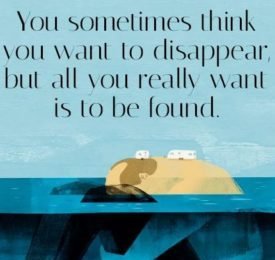
  • Value Yourself To Be Found

    Value Yourself To Be Found

    • How often do you keep drifting away from your own people because there’s this one person who rules your entire system.
    • How often do you get walked on by people who don’t really matter? How often their opinions start to collect and play on you.
    • How often do you start to lose friends when they say that ‘you are not same anymore or how many times do you want us to call you or be after you to be a part of something.’

    So, you might as well just accept that you are the cause, you are the pain and you are the suffering for others’ discomfort.

    But, the reality is very different from what you assume & follow. The reality is just what it reflects in the image above. You really want people to find the lost soul in you, you want that care to be able to overcome that, that holds you back. Your behaviour speaks differently and that is the evidence, the cue that you give to yourself consciously and to others subconsciously. So, the external support that you want starts to dim away in time. The only helping hand that remains then is your internal system. Yes, If you do not segregate your internal dialogue with the healing capacity your internal system holds, then you are in a soup.

    Life certainly cannot be only roses and blooms, it’s a blend of bitter sweet moments. How you let any experience impact you determines its depth. Similarly, you would have some events that could keep you away from mingling, trusting, holding, losing anything and everything that either you desire or want to shun away. But the question is ‘Can you really trust the outside world to be there for you in any given time, when needed. What do you think the answer is? No… Well its Yes as well as No. Instant gratification for anything isn’t guaranteed and even if you experience it and feel satisfied, it isn’t guaranteed for it to be a part for a lifetime.

    The gloomy feeling we all go through in times of despair, mistrust, misunderstanding, loss and suffering is evident and sometimes our closest people might not recognize the pain (due to their own occupied lives) but that doesn’t mean that you hold yourself back from expressing, just in an assumption that they don’t care or are not interested. People do need you just like you need them. Only because, in anticipation you keep away at times, you might just start believing that they also want to keep away from you. This is the main cause for diminished relationships these days.

    If you really want to be found in life, in your relationships; you need to value your inner being – that, my dear is the key to be found, even in places full of voices. Everything you say and do will carry an underlying meaning. When you start losing yourself is when you lose those around you. Nourishing your inner being gives you the power to recognize that underlying concept of your actions. That is when you start to hear your own voice. That is what I call victory. Recall any incidence in life where you made a choice, committed an action, spoke out your heart and realized how it energized you. That is what it means to value your inner being.

    Losing your happy soul in order to make other people happy, thus questioning yourself day in and day out about why you did what you did is only emptying you from within. If helping is a part of your nature, then it shouldn’t give you a feeling of being disappeared and if that is the feeling you get, then you need to figure out if what you are doing for others is helping or something else.

    To be found by others in time of need is great, but to be found by oneself always is a strength. Find yourself, value your inner being, replace that inner dialogue of self-sabotage and blame to your inner healing power. Once you figure out the power of it, nothing can shake your self-esteem and self-worth in your own eyes & that is what matters at the end of the day.

  • Listen, Inquire, And Respond

    Listen, Inquire, And Respond

    This post is about a lot of things. When we say life management, what does this word ‘life’ include? It includes all are systems – at micro level as well as macro level and even beyond.

    From our ‘self’ to our relationships to our extended contacts. Our life management is a totally internal concept and all that, that comes from the external environment are the different cues, which we allow in our lives and when we do that, they can have a positive or negative effect on us. This effect is quite controllable in reality but we human beings believe the unreal realistically and ignore the real unrealistically – I will leave this sentence for you to contemplate.

    Let’s take an example; Suzy was trying to tell Aron to make it a habit to keep his things in place. However, as always Aron felt a little careless in doing so. Although he knew it’s not good to create a mess around but he was habitual to not bother or ponder over it. So Suzy started to nag him strongly for every time he didn’t keep something in place. This little way of internal and external exchanges between them used to get them to argue at times, sometimes worse. Suzy used to keep picking on him, ‘keep this damn thing in place’, ‘why have you left this glass on my side of the bed’, ‘why do you ignore what I say’ etc. Aron’s replies were casual to strong, ‘I would do that’, ‘not a big deal’, ‘you can move it aside’. Gradually such things became a regular affair for them leading to argumentative scenarios. Result used to be nothing less than abusive, counter-arguments, breakups, banging and throwing things away and even leaving the house every now and then.

    Now just imagine, in this example, keeping things in place versus not so bothered attitude, Suzy and Aron got to a point where the value of relationship was compromised, leading to feelings of anger, rage, name-calling, ego states. Don’t you think such a mood will spread across all the spheres of these people – at the workplace, while driving, among friends and other family members? Well not necessarily, aggressively but also through avoidance, silence, tears, self-critical statements or what not.

    In our everyday lives, somewhere or the other, we encounter certain instances where we lose our control and behave in a way which we later realize could have been dealt with in another way, more suitable and appropriate. How many times we tend to play the blame game. Such as ‘it happened because of you’, ‘if this was not the circumstance, I would not have reacted this way’, ‘because you didn’t  care to know, even I didn’t bother’, ‘life is bad to me, that’s why I am bad to myself’, ‘people are mean, that’s why I hate the world’. How easily we put these frames ahead of us and escape the reality.

    The reality is ‘US’, ‘WE’, ‘ME’, and ‘I’. Let’s change these frames for better clarity – ‘It happened because I let it happen or it happened because it was supposed to happen’, ‘life is bad to me, doesn’t mean that I have to be bad to myself’ etc. Think about it, when with one sentence we can change the meaning and its impact over us, then why do we fail to do so while we are in a state of receiving the external cues that we feel are against us, harming us, not for us, putting us down? Simply, because we don’t listen, we don’t inquire, we don’t respond. We react (not the way we should).

    STEP 1: LISTEN

    Listen – when we ask someone to listen to us, what are we expecting from that person? We expect them to give attention to our dialogue, give a thought to what we might be meaning to say. Also, we expect them to show a semantic understanding towards us, our reaction and behaviour.

    Sometimes, our tonality is such that the word ‘listen’ also comes across as rude, loud, aggressive, however, in order to make it stronger, we sometimes shout out ‘listen’ and say whatever we want to in a go. Is it helpful, do you gain what you intend to? Not really because the other party has another story and they also expect similar kind of attention to their dialogue, their meaning and their understanding.

    Whereas, when both the parties are in an argument, the conclusion is zero understanding, zero attention and the entire meaning is lost leading to further complex situations. This doesn’t only happen between two, three or four people, it even happens with our own selves – sometimes the confusion that we build around our inner dialogues can have major consequences with our confidence, self-esteem, self-respect, identity questioning, anxiety etc. I would love to write a new blog on this context, sometime later.

    Coming back to ‘listening’. Positively speaking, listening is a great tool to effective management of our relationships with our own selves as well as with others. When we give an opportunity to ourselves, okay, not others but ourselves to listen to someone or something, what we are actually doing is creating a room for growing our minds to effective analysing less complicated reservoirs of knowledge- sounds complicated.

    When we listen, we let the other person complete their version, helping them vent out their feelings and emotions and helping them empty their anger and suppression first. At the same time helping ourselves cool down before we actually build baggage of regret. Once we know the other side, we have achieved the capability of responding; Responding (not reacting). Easier said than done but practicing listening is something you can engage yourself in. It’s a skill you can master.

    Step 2: INQUIRE

    To inquire here doesn’t denote a formal investigation from inside to outside and vice-versa of person’s behaviour, words, body language, gestures etc but simply means to know the correct stance for us to be able to respond aptly. The capability of responding is unbelievably a beautiful mastery of harmless existence.

    So paraphrasing what we listened (just not heard) from the other end and summarizing it to the other person will give him/her the ability to embrace our understanding to their activity, in turn giving them an opportunity to avail this dynamically silent feature called ‘listening’ available to us all.

    Sadly, we fail to incorporate it into our daily lives. Just because we don’t really give it a thought. There would be times that the person to whom we would summarize the situation might not be in a position to think, listen, absorb anything due to a heightened state of anxiety, overflowing emotions or mixed state of confusion.

    It’s alright, listening and then inquiring will help us come to a point where we can monitor, control and channelize our energies towards giving in or keeping out of a heated situation. There is no loss either way or all this will be possible because we would allow both the phases (listening & inquiring) to occur as filters to our communication, leading to step 3.

    STEP 3: RESPOND

    I have mentioned responding (not reacting) above because sometimes as humans we look for cues to satisfy our current state of mind, so exchanging responding with reacting can be a common mistake to all of us beings. Clarity to what responding could possibly be might have occurred to you in step 1 and 2. However, a little more reflection might be helpful.

    First of all, practicing these steps consciously will help us gain wisdom to respond or not respond to a particular situation. That means, we get the power to modulate the internal impact of any situation as such. We also get the authority to pace it down in a way that indirectly we are able to help the other person by letting him/her vent it all out before us.

    Lastly, it gives us the chance of measuring where we stand in terms of being hurt/pricked/angry/lonely and impulsive. It’s liberating to master this achievement. Try it out. Give yourself a time period ranging from 5 to 500 situations that can test you and your patience. Beat it, as quickly as you grasp these life management tips. Feel free in your space and in space with others from your home to work, to your hobby class through a conscious click of your conscience.

    Facebook I Instagram I Google I LinkedIN

  • 7 Ways To Un-Hack Your Life

    7 Ways To Un-Hack Your Life

    Google! Sounds synonymous to life these days… Isn’t it?

    Well, life has become mechanical. People are getting busier each day amidst this rat race of earning money, finding comfort and luxuries. The purpose of life seems so deflated than what life should really be. If you agree with me, then you know what will I be talking about. The idea is to grasp the pace, this quick pace; the 24*7 cycle is running. With trending social media, gadgets, entertainment, and even edutainment, everything has turned its way to mechanics and technicalities. How about emotions, feelings and thoughts? People prefer taking down quotes online, finding validations towards their feelings, and emoting that through media again. How much are we willing to take time and sit with our close ones to discuss the variety of ‘affective’ states we humans encounter each second, subliminally accepted?

    Not that Google is the culprit, not that the usefulness of handy internet services can be ignored. Does that mean surrendering ourselves to these operating systems will fetch us happiness? Shall we not recollect that the purpose of handling the technology is through humans, for humans, rather than technology handling us through its savvy ways?

    This is the hard truth we need to face.

    With the increasing pressures at work, complex relationship patterns, multicultural exchanges, and aggressive human competition, not just with oneself, but the society, is making us go back to the slave tradition. However, this time human isn’t slave to human but to a man-made tech-compost (I’d call it).

    The upside stories of ‘goo-gling’ the world is famous. Knowingly, we tend to ignore the downside. Physical ailments to mental breakdowns- how much can technical loops damage We usually get alarmed to stories of people committing suicide due to games played on various applications, increasing rage and early sexual involvement in adolescents due to social media etc.

    These are big concerns, ignored yet faced, believed yet ignored. Legal rules and regulations, polity involvement and global steps are taken to help and save us from these high impact stressors. What we generally do not notice is the gradual effect of time-consuming behaviors we reflect by giving into our belief that knowledge is Google and vice versa.

    Yes, the internet seems Godly in searching out and meeting our immediate  needs (from ordering food to looking for general to specific things to ratifying ourselves in finding answers to our life questions at 3am anywhere in the world). We must feel grateful for this marvelous connect offered to us by engineers of this universe.

    The intriguing factor is the discipline that we are destroying by becoming so mechanical day  by day in our lives. Engineers are not to be blamed for that. Is our workload too less?

    Has life been extremely peaceful to you? Can we say that life is completely stress-free?

    Not really!

    Then why are we adding onto the pressures of life by restricting ourselves through electronic communication? What you feel can only be empathetically understood in deeper terms when the communication is for real. Remember those days, when we were young and to find answers to our life puzzles, we used to look outside this lap-box? It seemed more like an exploration we still remember; most of it.

    Reducing the tech intake can serve a bigger purpose. Fatigue, weight gain, diabetes, wrong postures and muscle pains, headaches, frozen shoulders, mood swings, eye concerns, low self-esteem to name a few. How much can we take care of all this if we limit our tech-behavior to an outgoing fresh air seeker attitude? To generate and charge the self, we can un-follow certain practices and grow better habits to making life – purposeful, meaningful and happy.

    1- Notice your time for each activity:

    One has to keep a track of investing the right amount of time in the right kind of activity. Sometimes, browsing the internet takes away all the time, not helping us realize even the purpose for which we started browsing it. Therefore, tracking your time will help you limit your sedentary style over the laptop and will fetch you time for other important tasks.

    2- Un-addict ourselves:

    This one comes easily if we are able to notice our time and track it whilst following our routines. Once we engage ourselves in tasks measurably, we would gradually get over the urge to spend those ’extra minutes’ on our computers. We would know where to put a stop and feel responsible towards life in general.

    3- Affirmations:

    This is an effective tool anyway. The psychological impact of affirmations is spoken about  everywhere. Once we start affirming to positive statements as a daily practice, it unconsciously takes an energetic role in helping us believe in our capabilities. For example, affirming ‘I will make my day productive’. This statement practiced overtime will train your thoughts to actually be productive throughout the day, which eventually will involve more result oriented tasks than just being screen stuck.

    4- Lifestyle changes:

    This title speaks for itself. Making deliberate changes to our lifestyle such as having a proper  sleeping schedule, including daily exercise, drinking enough water, maintaining a healthy diet pattern, reducing over thinking and increasing positive thinking, practicing gratitude, managing time and balancing relationships. These modifications will bring life in a sync.

    5- Buzz a ME time:

    Buzz Buzz. A ‘ME’ time means giving oneself time off, from every nook and corner- from work, from rituals, from routine tasks. This ‘ME’ time suggests being with oneself just the way you like. Doing nothing, releasing stress or doing something you enjoy for your own leisure and then releasing stress; whichever way you like. Because ‘ME’ time is all about you with yourself and your cuppa maybe 5 minutes to 20 minutes, whatever you like every day.

    6- Make time for Quality:

    Why a different header when the above 5 hacks will work as quality indicators. Yes, they  definitely will. But when we speak of quality as a separate hack, what we mean is the effort  to bring quality in life. This effort isn’t about simply becoming a robotic character to the  previous points mentioned above. This is about inserting a quality check and rejoicing them  as a part of your journey such as spending quality family time, travelling occasionally to shun away the monotonous pattern, treating yourself with a quality meal, a massage and also bringing quality in one’s thoughts and emotions.

    7- Believe in yourself and stick to the plan:

    The final idea is to regain the confidence, increase our self-esteem by involving in tasks we  are good at, not underestimating our abilities and keep loving even when the days get hard or we fall due to obstacles and barriers while trying to focus on our goals.

    Facebook I Instagram I Google I LinkedIN